
IPTV in Taif: coverage guidance for hillside and multi-storey homes
A Taif guide to improving Wi‑Fi across floors, testing consistency, choosing quality and plans, and protecting home devices. This guide connects viewing conditions in Taif with practical device and network checks, covering Understand household IPTV use in Taif, Read the network conditions inside a hillside multi-storey villa or apartment in an elevated neighbourhood, Test speed and consistency at the television without claiming identical results in every district.
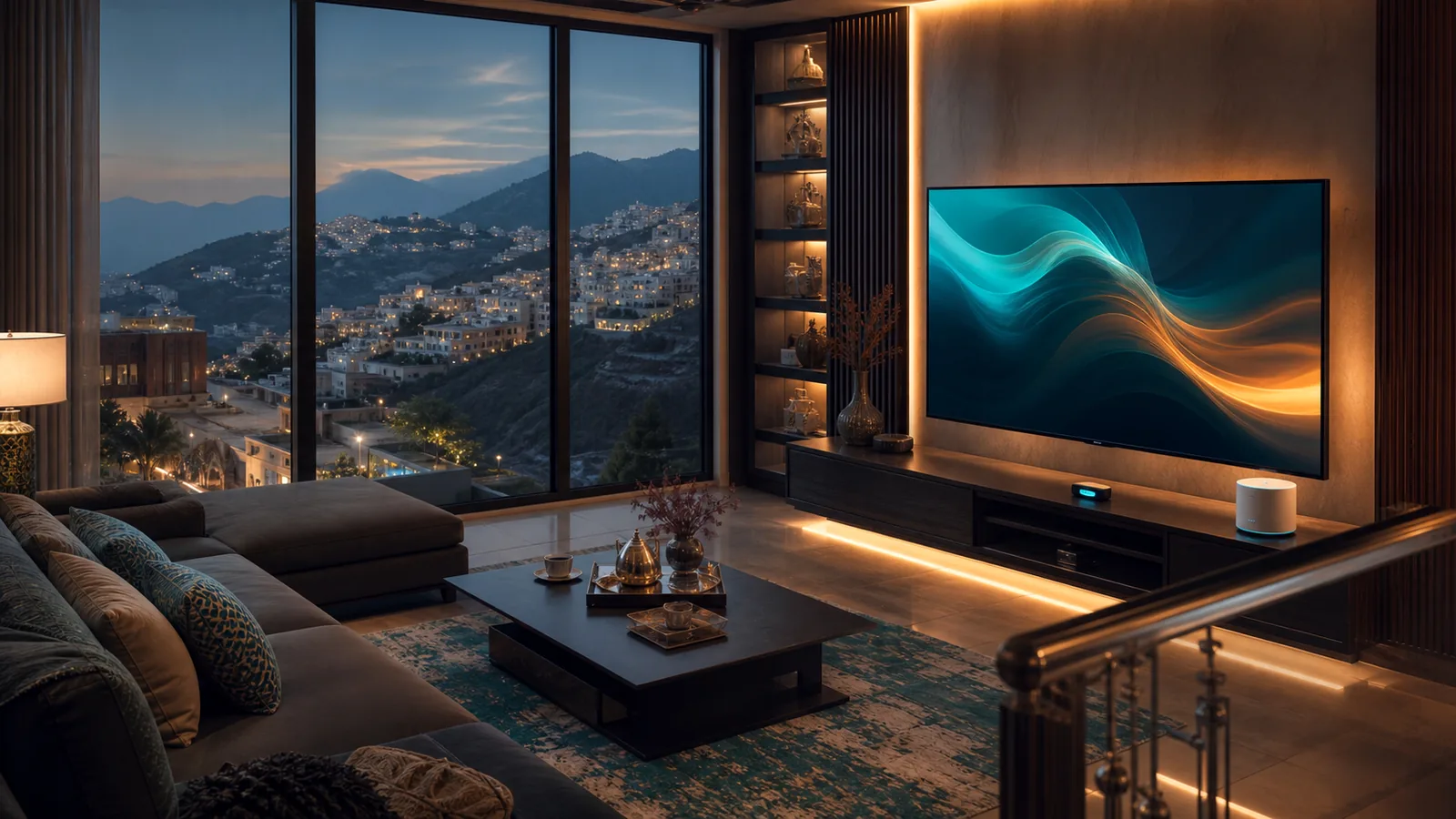
In Taif, the problem may sit between floors or behind a thick wall rather than in the line speed. Test every level separately, place mesh at an open midpoint, or use Ethernet for a fixed television.
This is an information page for a remote digital service, not a local branch page. No physical address is advertised and no measurement is claimed to represent every district.
This long-form guide answers practical questions about IPTV in Taif without artificial repetition of the city name. It connects the decision to measurable factors: screen location, housing type, connection consistency, simultaneous viewing, device security, and written order terms. Start with the short answer, work through the sections in order, and record each result.
Understand household IPTV use in Taif
The section “Understand household IPTV use in Taif” starts with a simple fact: the name Taif cannot predict viewing quality on its own. Taif’s elevation and prevalence of hillside, multi-storey homes make internal network design decisive. A strong signal near a window does not mean it remains strong behind stairs or on another floor. The decision therefore has to come from a test inside a hillside multi-storey villa or apartment in an elevated neighbourhood, at the exact location of the screen. The local action for this section is to draw a floor plan and mark walls and stairs before buying additional hardware. Record the connection type, router, distance and obstacles between the access point and television, and the devices active during the test. Do not use the highest number that appeared once; use the lowest repeatable result under normal household conditions. This approach prevents a local query such as IPTV in Taif from becoming an unverifiable citywide claim. It also gives the reader evidence that can support a plan, player, and network decision instead of repeating generic sales language.
Apply one change, keep the result, and only then move to the next variable. a coverage map for every floor, a mesh node at the midpoint, and a cable for a stationary screen. Begin with one item on one device and add another screen only when that represents real household use. Observe start time, interruptions, latency, player response, and picture stability instead of reducing the evaluation to an HD or 4K label. Final quality is shaped by the source, compression, player, device memory, home network, and external connection together. Also remember that elevation and cooler weather do not determine internet quality, but they can influence building form and device placement. Keep the router open and ventilated, clean television and streaming-device vents, and use a cable when it is practical. If the change does not help, restore the previous configuration before testing the next hypothesis. A controlled comparison produces a useful diagnosis; a pile of simultaneous changes only hides the cause.
To make the result representative of local use, repeat the measurement during mild-weather seasons and weekends when homes may host more family members and visitors and compare it with a quieter time. That difference does not automatically prove that the internet provider or content service is at fault, but it shows whether the problem follows a time pattern. Record the date, time, device, player, and connection method, and capture the exact error without exposing a username or password. Send support a short structured report rather than “it does not work.” Before payment, distinguish the player licence from content access and obtain written confirmation of price, duration, simultaneous screens, compatibility, and cancellation terms. Content and resolutions remain subject to availability and applicable rights; no responsible list can guarantee every item or quality at every moment in Taif or anywhere else.
A measurable local action
- ✓ draw a floor plan and mark walls and stairs before buying additional hardware.
- ✓ Record the time, location, device, and connection before changing anything.
- ✓ Test one variable, compare the result, and restore the previous setting when needed.
- ✓ Never share credentials or verification codes in public groups.
Read the network conditions inside a hillside multi-storey villa or apartment in an elevated neighbourhood
The section “Read the network conditions inside a hillside multi-storey villa or apartment in an elevated neighbourhood” starts with a simple fact: the name Taif cannot predict viewing quality on its own. Taif’s elevation and prevalence of hillside, multi-storey homes make internal network design decisive. A strong signal near a window does not mean it remains strong behind stairs or on another floor. The decision therefore has to come from a test inside a hillside multi-storey villa or apartment in an elevated neighbourhood, at the exact location of the screen. The local action for this section is to test the access point on every level because vertical separation changes the signal. Record the connection type, router, distance and obstacles between the access point and television, and the devices active during the test. Do not use the highest number that appeared once; use the lowest repeatable result under normal household conditions. This approach prevents a local query such as IPTV in Taif from becoming an unverifiable citywide claim. It also gives the reader evidence that can support a plan, player, and network decision instead of repeating generic sales language.
Apply one change, keep the result, and only then move to the next variable. a coverage map for every floor, a mesh node at the midpoint, and a cable for a stationary screen. Begin with one item on one device and add another screen only when that represents real household use. Observe start time, interruptions, latency, player response, and picture stability instead of reducing the evaluation to an HD or 4K label. Final quality is shaped by the source, compression, player, device memory, home network, and external connection together. Also remember that elevation and cooler weather do not determine internet quality, but they can influence building form and device placement. Keep the router open and ventilated, clean television and streaming-device vents, and use a cable when it is practical. If the change does not help, restore the previous configuration before testing the next hypothesis. A controlled comparison produces a useful diagnosis; a pile of simultaneous changes only hides the cause.
To make the result representative of local use, repeat the measurement during mild-weather seasons and weekends when homes may host more family members and visitors and compare it with a quieter time. That difference does not automatically prove that the internet provider or content service is at fault, but it shows whether the problem follows a time pattern. Record the date, time, device, player, and connection method, and capture the exact error without exposing a username or password. Send support a short structured report rather than “it does not work.” Before payment, distinguish the player licence from content access and obtain written confirmation of price, duration, simultaneous screens, compatibility, and cancellation terms. Content and resolutions remain subject to availability and applicable rights; no responsible list can guarantee every item or quality at every moment in Taif or anywhere else.
A measurable local action
- ✓ test the access point on every level because vertical separation changes the signal.
- ✓ Record the time, location, device, and connection before changing anything.
- ✓ Test one variable, compare the result, and restore the previous setting when needed.
- ✓ Never share credentials or verification codes in public groups.
Test speed and consistency at the television
The section “Test speed and consistency at the television” starts with a simple fact: the name Taif cannot predict viewing quality on its own. Taif’s elevation and prevalence of hillside, multi-storey homes make internal network design decisive. A strong signal near a window does not mean it remains strong behind stairs or on another floor. The decision therefore has to come from a test inside a hillside multi-storey villa or apartment in an elevated neighbourhood, at the exact location of the screen. The local action for this section is to record the lowest stable speed and highest latency during real playback. Record the connection type, router, distance and obstacles between the access point and television, and the devices active during the test. Do not use the highest number that appeared once; use the lowest repeatable result under normal household conditions. This approach prevents a local query such as IPTV in Taif from becoming an unverifiable citywide claim. It also gives the reader evidence that can support a plan, player, and network decision instead of repeating generic sales language.
Apply one change, keep the result, and only then move to the next variable. a coverage map for every floor, a mesh node at the midpoint, and a cable for a stationary screen. Begin with one item on one device and add another screen only when that represents real household use. Observe start time, interruptions, latency, player response, and picture stability instead of reducing the evaluation to an HD or 4K label. Final quality is shaped by the source, compression, player, device memory, home network, and external connection together. Also remember that elevation and cooler weather do not determine internet quality, but they can influence building form and device placement. Keep the router open and ventilated, clean television and streaming-device vents, and use a cable when it is practical. If the change does not help, restore the previous configuration before testing the next hypothesis. A controlled comparison produces a useful diagnosis; a pile of simultaneous changes only hides the cause.
To make the result representative of local use, repeat the measurement during mild-weather seasons and weekends when homes may host more family members and visitors and compare it with a quieter time. That difference does not automatically prove that the internet provider or content service is at fault, but it shows whether the problem follows a time pattern. Record the date, time, device, player, and connection method, and capture the exact error without exposing a username or password. Send support a short structured report rather than “it does not work.” Before payment, distinguish the player licence from content access and obtain written confirmation of price, duration, simultaneous screens, compatibility, and cancellation terms. Content and resolutions remain subject to availability and applicable rights; no responsible list can guarantee every item or quality at every moment in Taif or anywhere else.
A measurable local action
- ✓ record the lowest stable speed and highest latency during real playback.
- ✓ Record the time, location, device, and connection before changing anything.
- ✓ Test one variable, compare the result, and restore the previous setting when needed.
- ✓ Never share credentials or verification codes in public groups.
Place Wi‑Fi or Ethernet around the home layout
The section “Place Wi‑Fi or Ethernet around the home layout” starts with a simple fact: the name Taif cannot predict viewing quality on its own. Taif’s elevation and prevalence of hillside, multi-storey homes make internal network design decisive. A strong signal near a window does not mean it remains strong behind stairs or on another floor. The decision therefore has to come from a test inside a hillside multi-storey villa or apartment in an elevated neighbourhood, at the exact location of the screen. The local action for this section is to place mesh where it still receives a good upstream signal rather than inside a dead zone. Record the connection type, router, distance and obstacles between the access point and television, and the devices active during the test. Do not use the highest number that appeared once; use the lowest repeatable result under normal household conditions. This approach prevents a local query such as IPTV in Taif from becoming an unverifiable citywide claim. It also gives the reader evidence that can support a plan, player, and network decision instead of repeating generic sales language.
Apply one change, keep the result, and only then move to the next variable. a coverage map for every floor, a mesh node at the midpoint, and a cable for a stationary screen. Begin with one item on one device and add another screen only when that represents real household use. Observe start time, interruptions, latency, player response, and picture stability instead of reducing the evaluation to an HD or 4K label. Final quality is shaped by the source, compression, player, device memory, home network, and external connection together. Also remember that elevation and cooler weather do not determine internet quality, but they can influence building form and device placement. Keep the router open and ventilated, clean television and streaming-device vents, and use a cable when it is practical. If the change does not help, restore the previous configuration before testing the next hypothesis. A controlled comparison produces a useful diagnosis; a pile of simultaneous changes only hides the cause.
To make the result representative of local use, repeat the measurement during mild-weather seasons and weekends when homes may host more family members and visitors and compare it with a quieter time. That difference does not automatically prove that the internet provider or content service is at fault, but it shows whether the problem follows a time pattern. Record the date, time, device, player, and connection method, and capture the exact error without exposing a username or password. Send support a short structured report rather than “it does not work.” Before payment, distinguish the player licence from content access and obtain written confirmation of price, duration, simultaneous screens, compatibility, and cancellation terms. Content and resolutions remain subject to availability and applicable rights; no responsible list can guarantee every item or quality at every moment in Taif or anywhere else.
A measurable local action
- ✓ place mesh where it still receives a good upstream signal rather than inside a dead zone.
- ✓ Record the time, location, device, and connection before changing anything.
- ✓ Test one variable, compare the result, and restore the previous setting when needed.
- ✓ Never share credentials or verification codes in public groups.
Choose the device, player, and plan together
The section “Choose the device, player, and plan together” starts with a simple fact: the name Taif cannot predict viewing quality on its own. Taif’s elevation and prevalence of hillside, multi-storey homes make internal network design decisive. A strong signal near a window does not mean it remains strong behind stairs or on another floor. The decision therefore has to come from a test inside a hillside multi-storey villa or apartment in an elevated neighbourhood, at the exact location of the screen. The local action for this section is to choose a resolution that stays stable on the farthest screen instead of forcing 4K everywhere. Record the connection type, router, distance and obstacles between the access point and television, and the devices active during the test. Do not use the highest number that appeared once; use the lowest repeatable result under normal household conditions. This approach prevents a local query such as IPTV in Taif from becoming an unverifiable citywide claim. It also gives the reader evidence that can support a plan, player, and network decision instead of repeating generic sales language.
Apply one change, keep the result, and only then move to the next variable. a coverage map for every floor, a mesh node at the midpoint, and a cable for a stationary screen. Begin with one item on one device and add another screen only when that represents real household use. Observe start time, interruptions, latency, player response, and picture stability instead of reducing the evaluation to an HD or 4K label. Final quality is shaped by the source, compression, player, device memory, home network, and external connection together. Also remember that elevation and cooler weather do not determine internet quality, but they can influence building form and device placement. Keep the router open and ventilated, clean television and streaming-device vents, and use a cable when it is practical. If the change does not help, restore the previous configuration before testing the next hypothesis. A controlled comparison produces a useful diagnosis; a pile of simultaneous changes only hides the cause.
To make the result representative of local use, repeat the measurement during mild-weather seasons and weekends when homes may host more family members and visitors and compare it with a quieter time. That difference does not automatically prove that the internet provider or content service is at fault, but it shows whether the problem follows a time pattern. Record the date, time, device, player, and connection method, and capture the exact error without exposing a username or password. Send support a short structured report rather than “it does not work.” Before payment, distinguish the player licence from content access and obtain written confirmation of price, duration, simultaneous screens, compatibility, and cancellation terms. Content and resolutions remain subject to availability and applicable rights; no responsible list can guarantee every item or quality at every moment in Taif or anywhere else.
A measurable local action
- ✓ choose a resolution that stays stable on the farthest screen instead of forcing 4K everywhere.
- ✓ Record the time, location, device, and connection before changing anything.
- ✓ Test one variable, compare the result, and restore the previous setting when needed.
- ✓ Never share credentials or verification codes in public groups.
Reduce interruptions during local peak periods
The section “Reduce interruptions during local peak periods” starts with a simple fact: the name Taif cannot predict viewing quality on its own. Taif’s elevation and prevalence of hillside, multi-storey homes make internal network design decisive. A strong signal near a window does not mean it remains strong behind stairs or on another floor. The decision therefore has to come from a test inside a hillside multi-storey villa or apartment in an elevated neighbourhood, at the exact location of the screen. The local action for this section is to repeat testing during a weekend or family gathering to expose the real load. Record the connection type, router, distance and obstacles between the access point and television, and the devices active during the test. Do not use the highest number that appeared once; use the lowest repeatable result under normal household conditions. This approach prevents a local query such as IPTV in Taif from becoming an unverifiable citywide claim. It also gives the reader evidence that can support a plan, player, and network decision instead of repeating generic sales language.
Apply one change, keep the result, and only then move to the next variable. a coverage map for every floor, a mesh node at the midpoint, and a cable for a stationary screen. Begin with one item on one device and add another screen only when that represents real household use. Observe start time, interruptions, latency, player response, and picture stability instead of reducing the evaluation to an HD or 4K label. Final quality is shaped by the source, compression, player, device memory, home network, and external connection together. Also remember that elevation and cooler weather do not determine internet quality, but they can influence building form and device placement. Keep the router open and ventilated, clean television and streaming-device vents, and use a cable when it is practical. If the change does not help, restore the previous configuration before testing the next hypothesis. A controlled comparison produces a useful diagnosis; a pile of simultaneous changes only hides the cause.
To make the result representative of local use, repeat the measurement during mild-weather seasons and weekends when homes may host more family members and visitors and compare it with a quieter time. That difference does not automatically prove that the internet provider or content service is at fault, but it shows whether the problem follows a time pattern. Record the date, time, device, player, and connection method, and capture the exact error without exposing a username or password. Send support a short structured report rather than “it does not work.” Before payment, distinguish the player licence from content access and obtain written confirmation of price, duration, simultaneous screens, compatibility, and cancellation terms. Content and resolutions remain subject to availability and applicable rights; no responsible list can guarantee every item or quality at every moment in Taif or anywhere else.
A measurable local action
- ✓ repeat testing during a weekend or family gathering to expose the real load.
- ✓ Record the time, location, device, and connection before changing anything.
- ✓ Test one variable, compare the result, and restore the previous setting when needed.
- ✓ Never share credentials or verification codes in public groups.
Protect the television, router, and access details
The section “Protect the television, router, and access details” starts with a simple fact: the name Taif cannot predict viewing quality on its own. Taif’s elevation and prevalence of hillside, multi-storey homes make internal network design decisive. A strong signal near a window does not mean it remains strong behind stairs or on another floor. The decision therefore has to come from a test inside a hillside multi-storey villa or apartment in an elevated neighbourhood, at the exact location of the screen. The local action for this section is to keep equipment away from damp windows and heat sources and update it. Record the connection type, router, distance and obstacles between the access point and television, and the devices active during the test. Do not use the highest number that appeared once; use the lowest repeatable result under normal household conditions. This approach prevents a local query such as IPTV in Taif from becoming an unverifiable citywide claim. It also gives the reader evidence that can support a plan, player, and network decision instead of repeating generic sales language.
Apply one change, keep the result, and only then move to the next variable. a coverage map for every floor, a mesh node at the midpoint, and a cable for a stationary screen. Begin with one item on one device and add another screen only when that represents real household use. Observe start time, interruptions, latency, player response, and picture stability instead of reducing the evaluation to an HD or 4K label. Final quality is shaped by the source, compression, player, device memory, home network, and external connection together. Also remember that elevation and cooler weather do not determine internet quality, but they can influence building form and device placement. Keep the router open and ventilated, clean television and streaming-device vents, and use a cable when it is practical. If the change does not help, restore the previous configuration before testing the next hypothesis. A controlled comparison produces a useful diagnosis; a pile of simultaneous changes only hides the cause.
To make the result representative of local use, repeat the measurement during mild-weather seasons and weekends when homes may host more family members and visitors and compare it with a quieter time. That difference does not automatically prove that the internet provider or content service is at fault, but it shows whether the problem follows a time pattern. Record the date, time, device, player, and connection method, and capture the exact error without exposing a username or password. Send support a short structured report rather than “it does not work.” Before payment, distinguish the player licence from content access and obtain written confirmation of price, duration, simultaneous screens, compatibility, and cancellation terms. Content and resolutions remain subject to availability and applicable rights; no responsible list can guarantee every item or quality at every moment in Taif or anywhere else.
A measurable local action
- ✓ keep equipment away from damp windows and heat sources and update it.
- ✓ Record the time, location, device, and connection before changing anything.
- ✓ Test one variable, compare the result, and restore the previous setting when needed.
- ✓ Never share credentials or verification codes in public groups.
Checklist before buying IPTV in Taif
The section “Checklist before buying IPTV in Taif” starts with a simple fact: the name Taif cannot predict viewing quality on its own. Taif’s elevation and prevalence of hillside, multi-storey homes make internal network design decisive. A strong signal near a window does not mean it remains strong behind stairs or on another floor. The decision therefore has to come from a test inside a hillside multi-storey villa or apartment in an elevated neighbourhood, at the exact location of the screen. The local action for this section is to choose screen count according to repeated overlap in real use. Record the connection type, router, distance and obstacles between the access point and television, and the devices active during the test. Do not use the highest number that appeared once; use the lowest repeatable result under normal household conditions. This approach prevents a local query such as IPTV in Taif from becoming an unverifiable citywide claim. It also gives the reader evidence that can support a plan, player, and network decision instead of repeating generic sales language.
Apply one change, keep the result, and only then move to the next variable. a coverage map for every floor, a mesh node at the midpoint, and a cable for a stationary screen. Begin with one item on one device and add another screen only when that represents real household use. Observe start time, interruptions, latency, player response, and picture stability instead of reducing the evaluation to an HD or 4K label. Final quality is shaped by the source, compression, player, device memory, home network, and external connection together. Also remember that elevation and cooler weather do not determine internet quality, but they can influence building form and device placement. Keep the router open and ventilated, clean television and streaming-device vents, and use a cable when it is practical. If the change does not help, restore the previous configuration before testing the next hypothesis. A controlled comparison produces a useful diagnosis; a pile of simultaneous changes only hides the cause.
To make the result representative of local use, repeat the measurement during mild-weather seasons and weekends when homes may host more family members and visitors and compare it with a quieter time. That difference does not automatically prove that the internet provider or content service is at fault, but it shows whether the problem follows a time pattern. Record the date, time, device, player, and connection method, and capture the exact error without exposing a username or password. Send support a short structured report rather than “it does not work.” Before payment, distinguish the player licence from content access and obtain written confirmation of price, duration, simultaneous screens, compatibility, and cancellation terms. Content and resolutions remain subject to availability and applicable rights; no responsible list can guarantee every item or quality at every moment in Taif or anywhere else.
A measurable local action
- ✓ choose screen count according to repeated overlap in real use.
- ✓ Record the time, location, device, and connection before changing anything.
- ✓ Test one variable, compare the result, and restore the previous setting when needed.
- ✓ Never share credentials or verification codes in public groups.
How this local Taif guide was prepared
This guide treats Taif as a user service area, not as a shop address or a claim of uniform coverage. It is organised around housing, screen location, peak periods, device security, and purchasing decisions readers can test themselves. We do not claim to have measured every district or invent local figures; in-home testing remains the reference, supported by the official sources below.
Saudi IPTV Shop is a digital service and does not advertise a physical premises in Taif. The city in structured data describes topic and remote service coverage only. That editorial boundary supports trust and avoids a fabricated local landing page or nonexistent address.
Sources and external references
Use the official measurement and security references below, and use the map only to understand the city area. Links to our other Saudi sites provide complementary guides; they are not evidence of local connection quality.
Internal links for the next decision
Related Saudi city guides
Frequently asked questions about IPTV in Taif
01Is one internet speed suitable for every home in Taif?+
No. Measure the connection beside the screen and at the time you normally watch. Building layout, router distance, interference, and simultaneous screens matter more than the city name alone. Aim for consistency with capacity left for the rest of the household.
02Is fibre always better than 5G for IPTV in Taif?+
Fibre is often more consistent when it is installed and configured well, but actual results vary by provider, building, router, and indoor coverage. Compare consistency, latency, and packet loss instead of relying only on the maximum download figure.
03How many screens should a Taif household choose?+
Choose the highest number of viewing sessions that will run at the same time. Owning three devices does not require three simultaneous screens when their real use rarely overlaps.
04How can I reduce buffering in Taif?+
Compare more than one item and device, pause heavy downloads, improve access-point placement, try Ethernet, and temporarily lower resolution. If the issue continues, record the time, device, player, and exact message without posting credentials publicly.
05Is the IPTV player licence included with a subscription?+
Not necessarily. Content access and a player licence are separate services unless the order states otherwise in writing. Install the player through an official store and review its developer, permissions, and price.
06Does Saudi IPTV Shop have a physical branch in Taif?+
No physical shop or office is advertised in Taif. The service is digital; the city in this guide describes the user’s service area and remote-support context, not a local business address.
Reviewed by the Saudi IPTV Shop technical editorial desk.
Responsible local review: no invented physical address, no claim of uniform coverage, and no guarantee of permanent content or resolution.